Left Continue shopping
Your Order

You have no items in your cart

Free delivery with a minimum purchase of $50!

The Fresh Press

5 Organic Veggies You’re Probably Overcooking (And How to Fix It)

5 Organic Veggies You’re Probably Overcooking (And How to Fix It)

We have all been there: you open your fridge, pull out a fresh batch of organic greens, and toss them into a piping hot wok or boiling pot. A few minutes later, those once-crisp, vibrant vegetables turn into a limp, mushy shadow of their former selves.

Overcooking doesn't just destroy texture and flavor—it can also leech away water-soluble vitamins (like Vitamin C and B-complex) and delicate antioxidants. When you invest in organic produce, you are buying vegetables grown without synthetic chemical pesticides, rich in natural flavors and polyphenols. Protecting those nutrients in the kitchen is key!

Here are 5 organic vegetables you might be overcooking, along with simple culinary fixes and product recommendations from QFresh Organic to keep your meals crisp, flavorful, and nutrient-dense.

1. Organic Broccoli (芥兰花)

  • The Overcooking Mistake: Boiling broccoli until the florets turn dark olive green and the stalks become soft and watery.

  • Why it Matters: Excessive heat breaks down glucosinolates—the key sulfur-containing compounds in broccoli known for supporting gut health and cellular detox.

  • How to Fix It: Flash steam or roast for 4–5 minutes max. You want the broccoli to turn a brilliant bright green with a noticeable "snap" when you bite into the stalk.

  • Featured In-Stock Product: Organic Broccoli

2. Organic Xiao Bai Cai (小白菜)

  • The Overcooking Mistake: Throwing tender leafy Asian greens into a rolling simmer for 10 minutes alongside heavy stews.

  • Why it Matters: Leafy greens lose their delicate sweetness and high Vitamin C content when exposed to prolonged moist heat.

  • How to Fix It: The 60-Second Stir-Fry. Heat a splash of oil and smashed garlic in a hot wok. Toss in the sliced Xiao Bai Cai, stir vigorously for 60 to 90 seconds, and turn off the heat immediately. The residual pan heat will finish the job while preserving its juicy crunch.

  • Featured In-Stock Product: Organic Xiao Bai Cai

3. Organic Lady’s Finger / Okra (羊角豆)

  • The Overcooking Mistake: Slicing Okra into small rounds and simmering it too long, which creates a slimy, stringy texture.

  • Why it Matters: While Okra’s soluble fiber is fantastic for your gut lining, high, prolonged heat breaks down cell structures and releases excess mucilage prematurely.

  • How to Fix It: High-Heat Char or Whole Steaming. Keep the pods whole (or slice off just the tips) and blanch them whole in boiling water for 3 minutes before plunging into iced water. Alternatively, toss whole pods in olive oil and sear on a scorching hot skillet until lightly charred.

  • Featured In-Stock Product: Organic Lady's Finger

4. Organic Kai Lan (芥兰)

  • The Overcooking Mistake: Cooking thick Kai Lan stems until they turn soft, making the leaves bitter and soggy.

  • Why it Matters: Kai Lan is packed with minerals, calcium, and polyphenols. Over-boiling causes these valuable micronutrients to leach out directly into the water.

  • How to Fix It: Split the Stems First. Thick Kai Lan stems take longer to cook than the leafy tops. Slice the thick stems down the middle lengthwise before cooking, or add the stems to the wok 2 minutes before adding the leaves so everything finishes at the exact same time.

  • Featured In-Stock Product: Organic Kai Lan

5. Organic French Beans (四季豆)

  • The Overcooking Mistake: Stewing French beans until they lose their bright green color and bite.

  • Why it Matters: Crunchy beans are loaded with dietary fiber that feeds your gut microbiome. Overcooking breaks down this structural fiber and destroys heat-sensitive antioxidants.

  • How to Fix It: Blanch & Ice Bath. Drop French beans into salted boiling water for just 2–3 minutes until vibrant, then immediately transfer them into a bowl of ice water (shocking). This locks in their bright color, crisp texture, and nutrient profile before tossing into garlic butter or salads.

  • Featured In-Stock Product: Organic French Bean

Treat Your Organic Produce Right!

When you start treating your vegetables with a lighter touch in the kitchen, you will be amazed at how much sweeter and more flavor-packed certified organic produce truly is.

Want fresh, farm-certified organic produce delivered straight to your kitchen each week? Explore the full range of fresh greens, root vegetables, and fruits in our QFresh Organic Collection today!

Read more
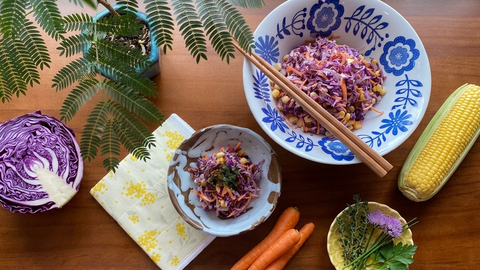
Recipe: Easy Japanese-Inspired Cabbage Slaw

Recipe: Easy Japanese-Inspired Cabbage Slaw

Opening up your weekly QFresh Organic Subscription Box is always an exciting experience, but every now and then, you might pull out a vegetable that leaves you scratching your head: "What do I actually make with this?"

If you recently spotted a vibrant head of purple cabbage in your box and felt a little stumped, don't worry—we have you covered. Purple cabbage is a nutrient powerhouse packed with antioxidants, but its raw crunch can feel intimidating. This quick, Japanese-inspired slaw transforms humble cabbage and carrots into a rich, umami-packed side dish that pairs perfectly with almost any main course.

Ingredients You’ll Need

  • 1/2 head Organic purple cabbage

  • 1/2 medium Organic carrot

  • 1/2 cup Sweet corn kernels (canned or fresh cooked)

  • 2 tbsp Mayonnaise (Japanese Kewpie mayo works best!)

  • 1 small sachet Bonito flakes

  • 1 tsp Wholegrain mustard

  • Salt and black pepper, to taste

  • Dried seaweed flakes (Aonori) for garnish

Step-by-Step Instructions

  1. Prep the Veggies: Finely shred the purple cabbage and slice the carrots into thin, delicate strips.

  2. Draw Out the Moisture: Transfer the shredded cabbage and carrots to a dish, toss with a pinch of salt, and let them rest for 15 minutes. Pro tip: This draws out excess water so your slaw stays super crispy instead of watery! It also prevents the cabbage from feeling 'rubbery'.

  3. Whip Up the Sauce: While the veggies rest, combine 2 tablespoons of mayonnaise, 1 teaspoon of wholegrain mustard, 1 sachet of bonito flakes, and a pinch of salt and pepper in a mixing bowl. Stir until smooth.

  4. Squeeze and Drain: Using your hands or a clean kitchen towel, thoroughly squeeze out the excess liquid from the rested cabbage and carrot shreds.

  5. Combine: Add the squeezed vegetables and 1/2 cup of corn kernels directly into the sauce bowl.

  6. Toss and Garnish: Mix well until every strand is coated in the creamy, savory dressing. Plate it up, sprinkle generously with dried seaweed flakes, and serve!

This crunchy, savory side dish proves that cooking with fresh, organic produce doesn't have to be complicated. What's your favorite way to use purple cabbage? Drop your ideas in the comments below!

Read more
Organic: The Ultimate Secret Weapon for Your Gut Health

Organic: The Ultimate Secret Weapon for Your Gut Health

We all know the mantra: eat more fruits and vegetables to get your daily dose of fiber. While adding any produce to your plate is a step in the right direction, how that food is grown can make a profound difference to your digestive ecosystem. Choosing organic produce isn’t just a fad—it is a direct upgrade for your microbiome.

Here are four scientific reasons why organic food helps your gut truly thrive.

1. It Protects Your Microbiome from Harmful Pesticides

The defining edge of organic farming is its strict limitation on synthetic chemical pesticides. Emerging scientific research—including animal and lab studies—suggests that commonly used synthetic pesticides, such as glyphosate, can have toxic effects on beneficial gut bacteria.

When these chemicals disrupt the delicate balance of your microbiome, your "good" gut bacteria struggle to produce short-chain fatty acids (SCFAs). SCFAs are important compounds responsible for keeping your gut lining strong and keeping internal inflammation in check. Swapping to organic drastically minimizes your exposure to these residues, giving your helpful microbes a clean environment to flourish.

2. It Delivers a Richer Variety of Soil Microbes

Just like humans, plants rely heavily on their own microbiome, which is cultivated by the soil they grow in. Organic agriculture prioritizes nutrient-dense, biologically active soil rather than synthetic fertilizers. As a result, organic fruits and veggies host a noticeably more diverse community of natural microbes.

  • The Apple Study: A landmark study in Frontiers in Microbiology revealed that organic apples contained a significantly more diverse array of beneficial bacterial communities than conventionally grown ones.

  • The Gut Connection: Enjoying fresh, raw organic produce introduces these beneficial plant microbes directly into your system, helping to seed and enrich your own gut flora.

3. It Packs a Higher Punch of Gut-Loving Polyphenols

Without synthetic chemical sprays to shield them from pests, organic plants have to build up their own defense mechanisms against environmental stressors. They do this by naturally synthesizing higher concentrations of defense compounds, known as polyphenols and antioxidants.

A comprehensive meta-analysis evaluating over 300 peer-reviewed studies concluded that organic crops hold anywhere from 19% to 65% higher concentrations of antioxidants compared to conventional crops. Polyphenols function as potent prebiotics—traveling to your lower intestine where they feed key probiotic strains like Lactobacillus and Bifidobacterium.

4. It Shields You from Unwanted Antibiotic Residues

Beyond fruits and vegetables, choosing organic across dairy and meat protects your ecosystem from hidden disruptions. Organic standards strictly prohibit the routine, preventative use of antibiotics in livestock.

Conventional farming consumes a massive portion of global antibiotics, which can leave trace residues in meat and dairy products. Ingesting even low levels of antibiotic residues can inadvertently wipe out beneficial gut strains and encourage antibiotic resistance within your microbiome.

Eating conventional produce gives you fiber, but choosing organic takes your wellness a step further. By eliminating microbiome-disrupting chemicals and providing richer plant microbes and prebiotics, organic foods give your gut everything it needs to function at its absolute best.

Which organic swap are you making in your kitchen this week?

Read more
Unlock Your Gut’s Full Potential

Unlock Your Gut’s Full Potential

If you have ever caught yourself adding the exact same bag of spinach, broccoli, and apples to your grocery cart week after week, you are definitely not alone! It is easy to fall into a routine when you are trying to stay healthy. But when it comes to your digestive health, routine might actually be holding you back.

Want a healthier gut? It turns out it is not just about eating more veggies—it is about eating a wider variety. Read on to find out why 30 varieties per week might just be the magic number for you!

The Problem with Routine Eating

Your gut is home to trillions of bacteria known as your microbiome. Think of your microbiome as a bustling city filled with specialized workers. Different strains of bacteria thrive on different types of fuel. One size doesn't fit all of them!

When you rely on the same three or four staple veggies, you are only feeding a fraction of your gut crew. The rest of your beneficial microbes get left out, which can lead to a less resilient digestive system. 

Diversity In = Diversity Out

Eating a colorful spectrum of plant foods provides a vast array of unique fibers and polyphenols—the natural compounds found in plants that nourish your gut.

When you expand the variety on your plate, you feed a broader spectrum of beneficial bacteria. A diverse microbiome works hard for you by:

  • Strengthening your gut lining - this protects against "leaky gut" by preventing toxins and unabsorbed food particles from leaking into your bloodstream. This significantly improves nutrient absorption, reduces systemic inflammation, and lowers the risk of chronic digestive disorders and immune issues.

  • Improving digestion and nutrient absorption

  • Supporting a resilient immune system

Your Weekly Challenge: Aim for 30!

The American Gut Project found a compelling pattern in gut health data: individuals who eat at least 30 different plant foods a week have significantly more diverse microbiomes than those who eat fewer than 10.

Hitting 30 might sound like a stretch at first, but every plant food counts—fruits, vegetables, nuts, seeds, whole grains, and even herbs and spices! One of the easiest ways to do this is to ensure that your plate always looks like a rainbow. A rainbow of different coloured natural foods almost always means that you're consuming a good mix of different fibres. 

Photo credits: Harvard Health Publishing


How to Hit 30 Without the Hassle

Trying to source 30 different organic ingredients at a standard grocery store can quickly become expensive and lead to unnecessary food waste. That is where we come in.

At QFresh Organic, we designed our Organic Subscription Box specifically to solve this problem.

  • Daily Variety: Our boxes feature an ever-changing mix of fresh, peak-season organic fruits and vegetables.

  • Zero Guesswork: You automatically get a wide array of colors, fibers, and nutrients delivered right to your doorstep.

  • 100% Certified Organic: Pure, pesticide-free fuel for your gut crew, exactly as nature intended.

Instead of buying large bunches of veggies you might not finish, a subscription box exposes your kitchen to a rich variety of seasonal produce naturally—making your goal of 30 plant foods a week effortlessly achievable.

Ready to Build a Better Gut?

Take the friction out of meal planning and give your microbiome the diversity it craves. Order your QFresh Organic Subscription Box today and make reaching your health goals the easiest part of your week!

How many different plant foods have you eaten today? Count them up and drop your number in the comments below!

Read more